
Booklets on Racism and Ways to Advance Anti-Racism
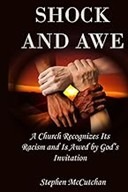
Shock and Awe
A Novel That Explores How the Church Addresses Racism
To address the shameful history of racism in the church, Christians must move past the twin barriers of denial and crippling guilt. This journey calls for a redemptive faith that courageously faces our past, enabling us to engage with our history honestly and openly.
Shock and Awe adapts the lessons of the South African Truth and Reconciliation Commission. It allows the church and Black and White people to explore the power of confession and forgiveness to reconnect the racially divided community of faith. It inspires healing and hope in our fractured society.
This book provides specific steps by which the Christian community can reflect the God who was in Christ and reconcile the world to God’s self. It calls the church to trust God to offer a way to overcome racism and celebrate the diverse world that God loves.
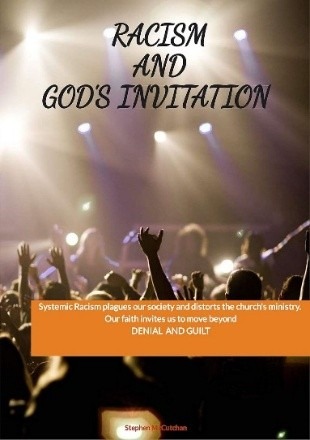
Racism and God’s Invitation: A Christian Approach to Systemic Racism
In order to confront the painful history of racism within the church, it is essential for Christians to rise above the twin barriers of denial and crippling guilt. This transformative book invites you to explore the concept of “redemptive faith,” which courageously addresses our past while paving the way for a brighter future.
Drawing on the powerful lessons of the South African Truth and Reconciliation Commission, this book empowers both Black and White people to engage in a meaningful dialogue about the profound impact of confession and forgiveness. Together, we can bridge the racial divides that have long plagued our communities of faith and extend a message of healing and hope to our fractured society.
Discover steps for the Christian community to reflect the God who was in Christ and reconcile the world to Himself. Join us in this journey and trust in God’s promise to overcome racism and celebrate the beautiful diversity of His creation.
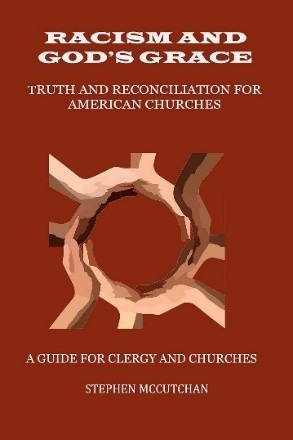
Racism and God’s Grace: Truth and Reconciliation for American Churches
Many churches are reluctant to initiate anti-racism ministry because they are concerned it would contribute to divisions rather than reconciliation. This book offers specific steps that churches can take to reaffirm the vision of God reconciling the world to God’s self and not counting our sins against us. Racism doesn’t need to defeat churches. Racism can be recognized and defeated by active Christians. Drawing on the experience of the Truth and Reconciliation Commission of South Africa, and a biblical guide to confession and forgiveness, together with the discipline of Active Listening, this guide can assist you in demonstrating hope for our fractured world. Join us in our mission and nurture a deeper faith among Christians in the process.
Let’s Have Lunch: Celebrating 20 years of Presbyterian Inter-racial Dialogue
Let’s Have Lunch celebrates the 20-year journey that a group of clergy and their churches took in order to confront the toxic presence of racism in the community of Winston-Salem, North Carolina. This story of hope begins with three people having lunch in the face of some debilitating tensions within their community in 1992.
Let’s Have Lunch highlights the power of community to overcome divisions. It shows what happens when ordinary people begin to try to understand and act against the force of racism. Discover the surprising and often creative ways that the people of six churches addressed the issue of race in their larger community. This is a story of how that effort expanded to include the interfaith community.
However, perhaps most of all, it is an invitation to the readers to refuse to be defeated by the complex issue of racism and begin to address it in their lives and community. It is an invitation to have lunch and be open to the unexpected and inspiring things that can happen.
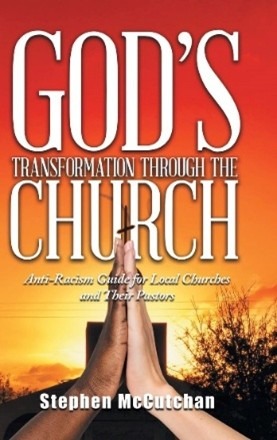
God’s Transformation Through the Church
In an age when many people are frustrated and leaving the church because of what they see as the church’s hypocrisies and failure to be faithful, author McCutchan explores, with both Biblical examples and our current reality, how God chooses to work through imperfections.
He explains how God transformed the cross, which appeared to be a sign of people’s rebellion against God, into a symbol of hope and healing. Using examples, he describes how the weekly gathering for worship is the work of fully human members of the Body of Christ that reflects Jesus’ ministry to proclaim freedom for captives, restore sight to the blind, and liberate the oppressed.
He also offers a step-by-step procedure for how a body of Christians with the strength and weaknesses of all humanity can open themselves to God’s Spirit and offer a healing and hopeful witness to a racist society. Members of a Christian community can deepen their spiritual life while offering witness to the diverse community that reflects the Kingdom of God coming on earth.